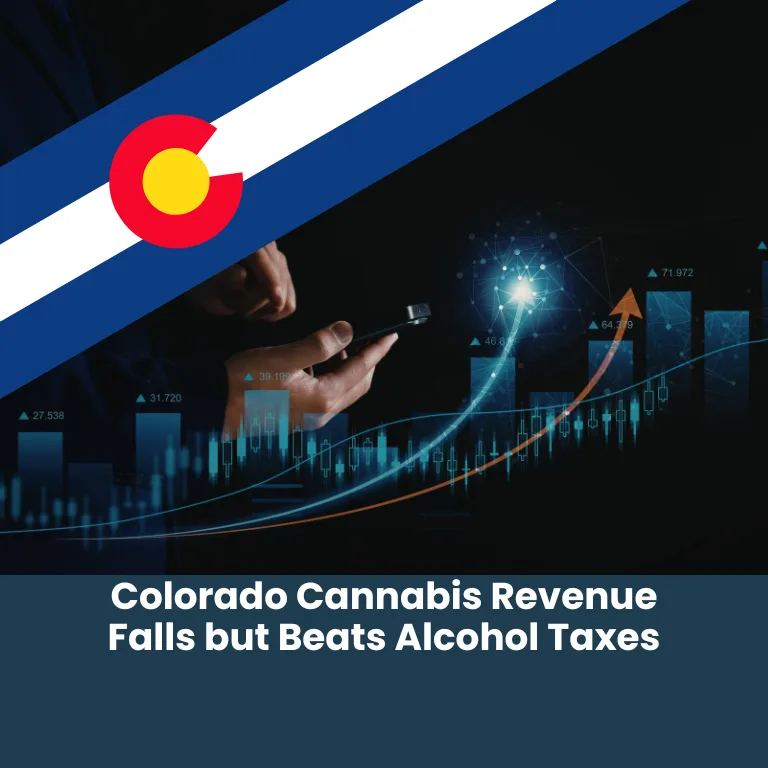
Colorado Cannabis Tax Revenue Declines As Legalization Spreads Nationwide And Hemp Products Surge, Yet Cannabis Still Generates More State Tax Dollars Than Alcohol And Cigarettes
Tax revenue from marijuana sales in Colorado has steadily declined over the past five years as more U.S. states have enacted legalization and as intoxicating hemp-derived products have grown in popularity, according to a new report from state officials. Despite the downturn, cannabis continues to generate more tax revenue for the state than alcohol or cigarettes.
A memorandum issued by the Colorado Legislature’s nonpartisan Legislative Council staff set out to answer “common questions about how revenue from the marijuana industry fits into Colorado’s state budget.” The report highlights that the state collected $231.1 million in cannabis tax revenue during the 2024–25 fiscal year.
Colorado taxes adult-use marijuana at three levels: a 15 percent excise tax, a 15 percent special sales tax and a 2.9 percent state general sales tax. As one of the earliest states to legalize recreational marijuana, Colorado experienced sustained revenue growth in the initial years of the market.
According to the memorandum, cannabis revenue grew “consistently for the first eight years of legalization,” ultimately peaking at $424.4 million in fiscal year 2020–21.
After Peaking In 2020–21, Marijuana Revenue Fell Each Year, Dropping More Than 45 Percent From Its High Point
Following that peak, however, the trend reversed.
“Revenue fell for the first time in FY 2021–22, and has declined each year since,” Legislative Council staff wrote. By FY 2024–25, marijuana tax revenue had fallen to $231.1 million—about 45.5 percent below its 2020–21 peak.
The memo attributes the downturn largely to market forces rather than policy changes.
Declining revenue “has largely been due to low prices and falling demand as other states across the country legalize marijuana, and alternatives like intoxicating hemp become more widely available,” the report states.
Expansion Of Legal Cannabis Markets Nationwide And Growth Of Intoxicating Hemp Products Divert Sales And Tax Dollars
Colorado was once a major destination for marijuana tourism, benefiting economically from prohibition in neighboring states. Gov. Jared Polis (D), a longtime advocate for cannabis reform, previously joked that he hoped large states such as Texas would delay legalization so Colorado could continue attracting out-of-state consumers.
While Texas still prohibits adult-use cannabis, legalization has now spread to nearly half of U.S. states—reducing Colorado’s regional advantage and contributing to softer demand.
The report also points to the rapid rise of intoxicating hemp-derived products as another factor siphoning revenue. Because many hemp products are taxed differently—or less heavily—than regulated marijuana, they can divert consumer spending away from the state’s cannabis market.
Whether that dynamic shifts could depend on federal policy. A pending federal ban on certain intoxicating hemp products, scheduled to take effect in November, could reshape the competitive landscape, though its ultimate impact remains uncertain.
Even With Falling Revenue, Marijuana Still Generates More Tax Income Than Alcohol, Tobacco And Nicotine Products
Despite the decline, cannabis remains a leading “vice tax” revenue source for Colorado.
Legislative Council data show that in FY 2024–25 marijuana sales generated more tax revenue than several other regulated products:
- Alcohol: $54.3 million
- Tobacco products: $68.2 million
- Nicotine products: $91.6 million
- Cigarettes: $213.9 million
- Marijuana: $231.1 million
The figures underscore marijuana’s continued fiscal importance to the state budget, even amid market contraction.
Consumer Trends Show Americans Increasingly Choosing Marijuana And Cannabis-Infused Beverages Over Alcohol And Cigarettes
Survey data cited in the broader policy discussion indicate shifting consumer preferences. Americans are increasingly opting for marijuana—including cannabis-infused beverages—over traditional substances such as alcohol and cigarettes.
That substitution effect has implications not only for public health debates but also for long-term tax revenue projections across multiple regulated industries.
Colorado Still Recorded More Than $1 Billion In Marijuana Sales In 2025 As Governor Warns Hemp Ban Could ‘Stifle Growth’
Even with declining tax receipts, total cannabis commerce in Colorado remains substantial. The state recorded more than $1 billion in marijuana sales in 2025, a milestone Gov. Polis highlighted in December.
While the Legislative Council linked part of the sales slowdown to hemp competition, Polis has voiced concern about federal intervention in that sector. He recently argued that the forthcoming federal ban on certain intoxicating hemp products could “stifle growth and innovation” in the broader cannabinoid marketplace.
Governor Separately Criticizes Colorado’s Role In Federal Marijuana-Gun Rights Lawsuit Before U.S. Supreme Court
In a separate but related policy development, Polis said last week that Colorado should not have joined a lawsuit supporting the federal prohibition on gun ownership by people who use marijuana. The case is currently before the U.S. Supreme Court.
The governor stated that he personally opposes the legal position taken by the state attorney general in backing the federal restriction, highlighting ongoing tensions between state cannabis legalization and federal law.
Topic(s):
OG source Download Article