Nebraska Becomes First Medical Marijuana State Left Unprotected From Federal Prosecution Under Longstanding Congressional Spending Rider
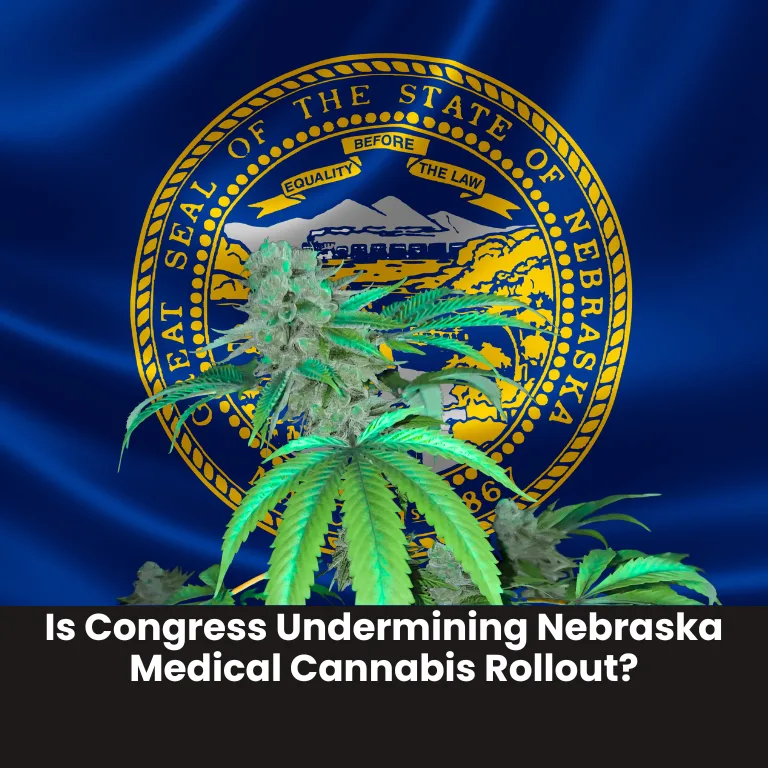
Nebraska has become the first U.S. state with a voter-approved medical marijuana program to lack protection from federal Justice Department interference under a key congressional budget rider—placing future operators at unique legal risk.
More than a year after voters legalized medical cannabis, businesses preparing to operate in Nebraska remain vulnerable to federal prosecution because the state was not included in the federal spending provision that bars the U.S. Department of Justice from targeting state-legal medical marijuana activity.
“This is the first time a newly authorized state has been left out since these protections were enacted,” said Steph Sherer, founder and executive director of Americans for Safe Access. “Nebraska is now being pushed back into that dangerous territory.”
Congressional Budget Language That Shielded Medical Cannabis Operators for a Decade Now Omits Nebraska
Since 2015, Congress has included language in federal appropriations bills preventing the Justice Department from using federal funds to interfere with state medical marijuana laws.
Originally known as the Rohrabacher–Farr Amendment, the provision has served as a critical safeguard for medical cannabis programs nationwide. Federal judges have repeatedly cited the rider when blocking prosecutions against compliant operators.
Recent versions of the rider listed 47 states with medical cannabis programs—but not Nebraska, despite voters approving legalization in November 2024.
Advocates first noticed the omission in a draft Senate spending bill last summer. The exclusion remained in the final spending package passed by Congress and signed by Donald Trump last month.
Delayed Program Rollout Leaves Nebraska Operators Exposed Before Sales Even Begin
Nebraska’s medical cannabis system has yet to launch, compounding concerns about federal exposure.
Voters approved legalization after a contentious 2024 campaign marked by lawsuits aimed at blocking the ballot measure and fraud allegations that ultimately went to trial. Subsequent legal challenges—including a suit from a former state senator aligned with national anti-cannabis groups—were dismissed.
Still, nearly 18 months later, the limited-license program remains stalled with no firm start date.
State rules cap each cultivator at 1,250 flowering plants—one of the strictest limits in the country. Only three of the four permitted cultivation licenses have been issued, and none of those operators has begun growing due to delays in implementing a seed-to-sale tracking system.
When sales do begin, patients will be restricted from purchasing cannabis flower or edible products under current regulations.
Advocates warn that the lack of federal protection could deter businesses from participating at all.
Advocates Question Whether Nebraska’s Omission Was Intentional
Industry observers and campaign leaders are questioning how Nebraska was excluded from the federal rider while every other medical marijuana state remained protected.
“The fact that we were not added to the rider to provide the same protections that every other state has on this, you really have to wonder ‘why’ and who is behind this,” said Christa Eggers, executive director of Nebraskans for Medical Marijuana, which sponsored the 2024 ballot initiatives. “This wasn’t an oversight in our eyes.”
So far, none of Nebraska’s congressional delegation has taken responsibility for the omission.
A spokesperson for U.S. Sen. Pete Ricketts—a former governor who opposed cannabis legislation—declined to address questions about involvement. Ricketts has also publicly opposed federal efforts to loosen marijuana restrictions, including Trump’s December executive order to review cannabis scheduling.
Federal Spending Battles and Drug Policy Fights Collide as Hemp and Cannabis Rules Tighten
The spending legislation that excluded Nebraska has been part of broader budget turmoil in Washington, including a record-length federal government shutdown in the fall.
Appropriations bills have increasingly become vehicles for drug policy decisions. The same package included language redefining hemp to exclude many intoxicating hemp-derived products from protections established under the 2018 Farm Bill.
As a result, hemp operators nationwide face uncertainty ahead of a federal ban on certain hemp-derived THC products scheduled to take effect later in 2026.
Regional Political Resistance Adds Further Headwinds for Nebraska’s Medical Cannabis Industry
Nebraska’s rollout has also been slowed by resistance from state leadership.
Gov. Jim Pillen, an outspoken opponent of the 2024 legalization measure, refused to approve regulatory frameworks without strict cultivation limits. His administration has also taken steps to restrict cannabis access on tribal lands within the state.
The موقف reflects a broader shift among some Midwestern leaders toward stricter cannabis policies—even as medical and adult-use legalization expands elsewhere in the United States.
Industry Faces Uncertain Path Forward Without Federal Shield
With no federal rider protection, delayed licensing, strict production caps, and ongoing political opposition, Nebraska’s medical marijuana sector faces one of the most uncertain launches in the country.
Advocates warn that unless Congress amends future spending bills to include Nebraska, the state’s would-be operators will remain uniquely exposed to federal enforcement despite acting in compliance with voter-approved state law.
Topic(s):
OG source Download Article