Federal Judge Rules Against Utah Officials in Religious Group’s Psilocybin Sacrament Lawsuit, Advancing Protections for Spiritual Use of Psychedelic Fungi
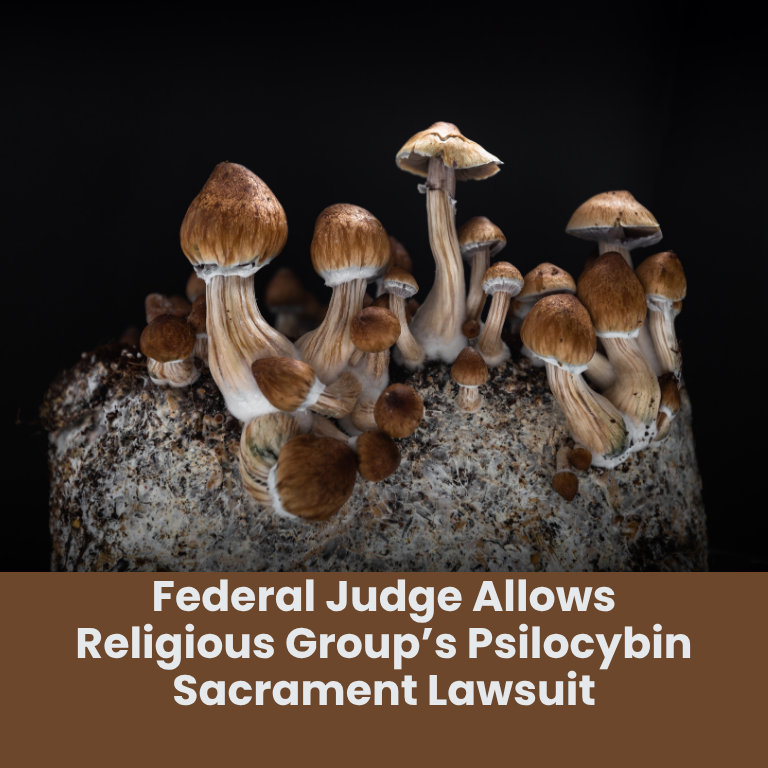
A federal judge has ruled against Utah state and county officials in a lawsuit brought by a Provo City-based religious group that uses psilocybin mushrooms as a sacrament. The case marks a significant development in the ongoing legal battles over entheogenic religious practices and government regulation of controlled substances.
Judge Denies Government’s Motion to Dismiss and Grants Anti-Suit Injunction to Protect Singularism’s Religious Freedom
This ruling follows the earlier decision by U.S. District Judge Jill N. Parrish to grant Singularism, the religious group involved, a temporary injunction ordering police to return psilocybin that had been seized during a raid on their spiritual center last year. While the initial injunction restored some relief, two outstanding legal matters remained: the government’s motion to dismiss the case and Singularism’s request for an anti-suit injunction to halt related state criminal prosecutions.
Judge Parrish denied the government’s motion to dismiss and granted Singularism’s motion for an anti-suit injunction, effectively preventing further state-level prosecution of the religion’s founder, Bridger Lee Jensen, over alleged violations related to psilocybin use.
Constitutional and Religious Freedom Grounds Underpin Singularism’s Lawsuit Following Raids and Criminal Charges
The lawsuit initially asserted claims based on the U.S. Constitution as well as Utah’s Religious Freedom Restoration Act (RFRA), enacted last year to safeguard religious practices from government interference. The controversy began when authorities seized psilocybin mushrooms and religious scripture during a raid of Singularism’s spiritual center.
Singularism responded by suing in state court, which was quickly followed by the state filing criminal drug charges against Jensen. Judge Parrish’s recent ruling criticizes the prosecution as an effort to harass Singularism for its religious use of entheogens and to circumvent the legal questions regarding free exercise of religion raised in the lawsuit.
Judge Emphasizes Serious Harm to Religious Group and Urges Immediate Protections to Prevent Irreparable Injury to Their Practice
The court highlighted the severe consequences of the ongoing prosecution on Singularism’s nascent religion, including loss of practitioners and affiliates. It noted that delaying resolution of the free exercise claims until after the conclusion of criminal proceedings would effectively destroy the fledgling faith community.
Judge Parrish issued the anti-suit injunction to halt further criminal proceedings relating to Jensen’s alleged violations of the Utah Controlled Substances Act concerning psilocybin, recognizing the substantial burden the prosecution imposes on the religious exercise of Singularism and its members.
Comparison of Utah’s Medical Psilocybin Exemption and Religious Use Highlights Inconsistencies in Enforcement
In her ruling, the judge pointed out that Utah law already creates exemptions for psilocybin use in secular, medical contexts. Therefore, an exemption should logically extend to religious use under similar principles. The government’s stated interest in preventing harm from dangerous substances applies equally to both secular and religious contexts.
The judge noted that risks cited by the government — such as tainted psilocybin or recreational users abusing religious exemptions — are equally present in the medical exemption, which lacks stringent sourcing or testing requirements.
Judge Rebuffs Government Argument That Criminal Prosecution Alone is the Source of Religious Burden, Affirming Statutory Prohibitions as Root Cause
Utah officials argued that the burden on Singularism’s religious practice stemmed solely from criminal prosecution, not the Controlled Substances Act itself. The judge rejected this reasoning, clarifying that the statute’s prohibition of psilocybin use is the fundamental source of burden on religious exercise. Without the statute, no criminal case could be brought.
This reasoning reinforces the principle that laws criminalizing religious sacraments can substantially burden religious exercise rights, triggering heightened scrutiny under RFRA.
Court Criticizes Government’s Position That No Actual Criminal Penalties Means No Religious Burden, Highlighting Flawed Logic
The judge sharply criticized Utah’s position that the absence of actual penalties to date negates any burden on religious exercise. She illustrated the flaw by hypothetically comparing the case to a scenario in which Catholic priests face prosecution for distributing wine at Mass under a state alcohol ban with limited medical exemptions.
The court held that even the threat or initiation of prosecution can substantially burden religious exercise, regardless of whether penalties have been imposed.
Federal Watchdog Report Calls for Clearer Religious Exemption Process for Controlled Substances Like Psilocybin
This ruling arrives amid growing scrutiny of how federal agencies handle religious exemptions for controlled substances. Last year, the Government Accountability Office (GAO) issued a comprehensive report criticizing the Drug Enforcement Administration’s (DEA) unclear and burdensome process for evaluating religious exemption requests under RFRA.
The GAO report emphasized the need for clearer timelines, evaluation standards, and transparency to ensure that religious groups seeking to use substances like psilocybin can navigate the regulatory process more effectively.
Past Precedent of Religious Use Exemptions Offers Context but Highlights Continuing Legal Uncertainty
While exemptions under the Controlled Substances Act for religious use remain rare, they are not unprecedented. In 2023, a landmark legal settlement allowed the Arizona-based Church of the Eagle and the Condor to import and use ayahuasca as a sacrament, securing protections without trial and marking a significant milestone for non-Christian religious use of entheogenic substances.
However, subsequent cases, such as the petition by the Iowaska Church of Healing seeking similar exemptions for ayahuasca, illustrate ongoing regulatory and legal challenges. Delays and government resistance continue to complicate religious entheogen use nationwide.
Political and Regulatory Dynamics Complicate Religious Exemption Efforts Amid Growing Interest in Psychedelic Spirituality
The Iowaska Church’s petition process drew unusual bipartisan attention, including involvement by anti-drug Senator Chuck Grassley. Though his assistance expedited procedural steps, it did not imply support for psychedelics themselves, reflecting the complex political landscape surrounding these emerging religious practices.
As interest in psychedelic spirituality grows, courts and regulators face increasing pressure to clarify and balance religious freedoms with public health and safety concerns.
This latest ruling marks a pivotal moment for Singularism and similar groups seeking recognition and protection for their entheogenic religious practices under the law. It highlights both the opportunities and challenges at the intersection of religious liberty, controlled substances law, and evolving societal views on psychedelics.
Topic(s):
OG source Download Article