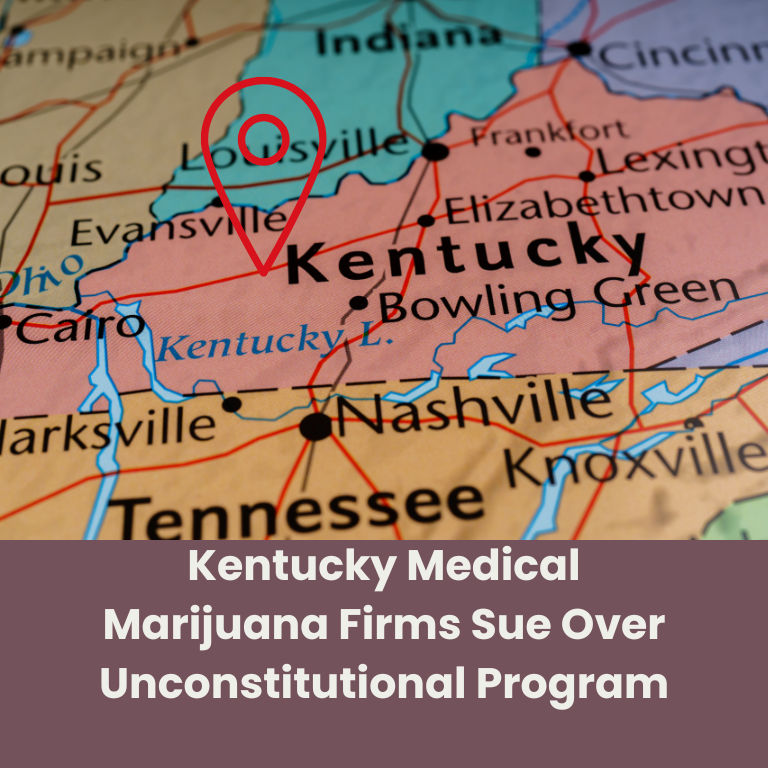
Kentucky Medical Cannabis Companies Sue State Over Constitutionality of Program Rollout
A group of medical marijuana companies in Kentucky has filed a major legal challenge against the state’s medical cannabis program, arguing that the entire rollout and licensing structure are unconstitutional. The lawsuit, filed June 27 in Jefferson Circuit Court, seeks not only to suspend the operations of existing licensed businesses but also to overturn the licensing process itself, which plaintiffs say unfairly excluded them from participating.
The plaintiffs, based in Jefferson County, claim that the Kentucky General Assembly improperly delegated authority to the Cabinet for Health and Family Services and its Office of Medical Cannabis (OCM), effectively bypassing constitutional legislative responsibilities in designing the MMJ system.
Companies Allege Licensing Rules Were Illegally Delegated to the Health Cabinet
The lawsuit centers on the claim that the General Assembly improperly empowered the executive branch, specifically the Cabinet for Health and Family Services, to create the geographic regions and license allocations for the medical marijuana program. According to James Gregory Troutman, the attorney representing the plaintiffs, this action violates Kentucky’s constitution.
This legal position challenges the foundational structure of Kentucky’s nascent MMJ program and could potentially halt operations for already licensed businesses if the court rules in the plaintiffs’ favor.
Lawsuit Demands Suspension of Active Licenses and Recognition for Rejected Applicants
The lawsuit not only questions the constitutionality of the regulatory process but also requests that current licenses issued through the 2024 lottery process be suspended. Plaintiffs are asking the court to award licenses to applicants who were denied during the initial rollout, arguing that the selection process was deeply flawed.
According to the plaintiffs, the lottery system favored out-of-state companies, and exploited loopholes in the application process allowed multiple entries by the same entity under different corporate structures—a practice they argue undermined the fairness and integrity of the entire system.
Local Businesses Say Out-of-State Operators Exploited Application Loopholes
Since the program’s launch, Kentucky cannabis entrepreneurs and community members have raised concerns about the application process. Critics claim that out-of-state corporations flooded the system with multiple applications, leveraging vague rules to improve their odds of winning limited licenses.
This has sparked frustration among local business owners and farmers, who argue that the system was intended to support Kentucky-based entrepreneurs and stimulate regional economic development.
The issue prompted Kentucky Auditor Allison Ball to announce in April that her office would investigate the program, citing widespread community concern over the equity and legality of the lottery-based licensing system.
Lawsuit Targets Former Program Director and Calls for Accountability
The lawsuit also names Sam Flynn, the former executive director of the Office of Medical Cannabis, as a defendant. Flynn served from his 2023 appointment until his departure earlier this year. Cannon Armstrong succeeded him, officially taking over as of June 1, 2025.
While the plaintiffs have not alleged personal wrongdoing by Flynn, they argue that the administration under his leadership failed to uphold constitutional procedures and contributed to the flawed execution of the MMJ licensing process.
Flynn has not publicly responded to the lawsuit.
Legal Outcome Could Redefine the Future of Kentucky’s Cannabis Program
This lawsuit represents a critical turning point in Kentucky’s medical marijuana journey. After years of advocacy, the state legalized medical cannabis with high hopes for a well-regulated, locally driven program. But the legal challenge now threatens to undermine early progress and expose major governance flaws in the system’s foundation.
If the court finds that the legislature unlawfully delegated its responsibilities, the ruling could lead to a full-scale overhaul of the program, potentially delaying access for patients and forcing currently licensed businesses to halt operations.
The outcome could also influence how other states approach cannabis regulation, especially in regard to legislative authority vs. administrative oversight.
As Legal Cannabis Takes Root in Kentucky, Industry Calls for Fairness and Clarity
For now, the lawsuit puts a spotlight on the fragile state of cannabis policy in Kentucky, where competing interests, legislative missteps, and administrative decisions are colliding at a crucial moment.
Local cannabis entrepreneurs are calling for greater transparency, fairness, and constitutional compliance in all future decisions, urging state officials to prioritize Kentucky businesses and communities as the program evolves.
As the court reviews the case, the cannabis industry and public alike will be watching closely. The future of Kentucky’s medical marijuana market may depend on the legal outcome of this pivotal constitutional challenge.
Topic(s):
OG source Download Article