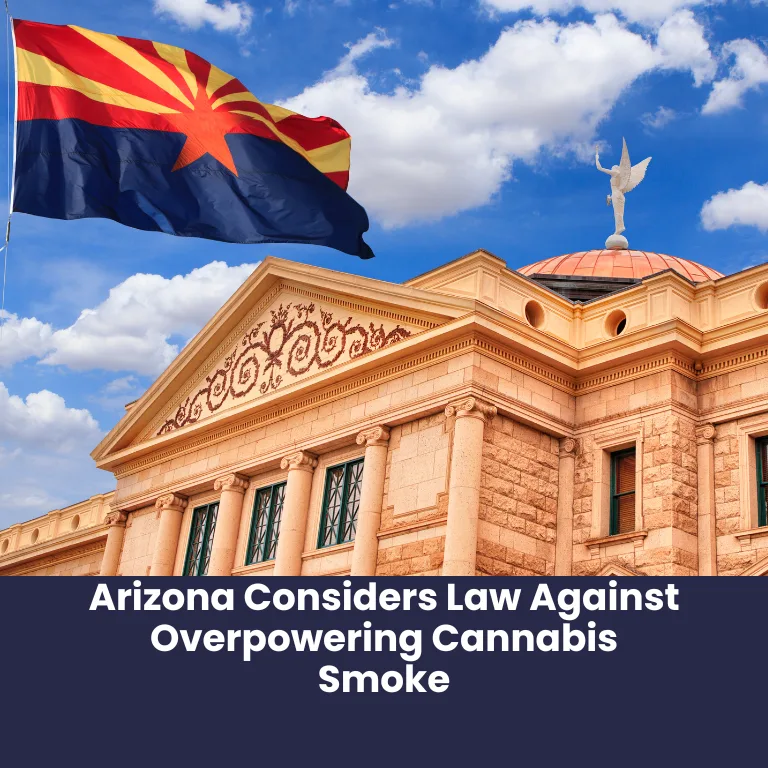
Arizona State Senator Proposes Legislation Targeting Excessive Marijuana Smoke in Residential Neighborhoods, Citing Personal Experience in Chandler as Motivating Factor
CHANDLER, AZ — Arizona State Senator J.D. Mesnard has introduced a legislative proposal aimed at curbing what he describes as “excessive marijuana smoke and odor” in residential neighborhoods. The Republican lawmaker, who resides in Chandler, told Capitol Media Services that smoke from an unknown source in his neighborhood has made it difficult for families to enjoy their own yards, prompting his legislative push.
Mesnard’s proposal, SB 1725, would expand existing state laws regarding public nuisances to include marijuana smoke, allowing judges to issue orders for property owners to abate the nuisance. The measure defines excessive marijuana smoke and odor as injurious to health, offensive to the senses, and an obstruction to the free use of property, creating a presumption that the presence of such smoke constitutes a public nuisance.
Legislation Would Shift Burden of Proof to Homeowners, Allow Jail Time and Fines for Those Maintaining Marijuana Smoke Nuisances
Under Mesnard’s proposed law, homeowners would be required to demonstrate that their marijuana smoke does not constitute a nuisance. Failure to comply could result in up to four months in county jail and a fine of $750. The bill also allows government authorities or homeowner associations to intervene if the property owner does not abate the nuisance, with associated costs potentially becoming a lien against the property.
“This is about responsible neighbors,” Mesnard said. “When your actions affect other people, especially kids, that’s where I take serious issue. People may not even be able to have their kids go outside because the marijuana smoke is so potent. It can creep into your own house, or in my case, into my garage.”
Bill Comes More Than a Decade After Arizona Legalized Medical and Recreational Marijuana, Raising Questions About Voter Intent
Arizona voters first approved medical marijuana in 2004, and recreational use followed a decade later. While public use remains prohibited, state law does not specifically regulate marijuana use in private homes or yards. Mesnard’s proposal seeks to fill that gap by explicitly including residential marijuana smoke as a form of public nuisance.
However, the legislation raises constitutional questions, as any changes affecting voter-approved initiatives could be considered amendments to the initiative itself. To address this, Mesnard has also filed SCR 1048, a companion measure that would place the question on the November ballot, giving Arizona voters the final say.
Proposed Rules Would Empower Judges to Mandate Nuisance Abatement, While Capping Legal Penalties and Imposing Fee Liens
The bill allows judges to require property owners to eliminate the nuisance or face government intervention. Any costs incurred by the government or homeowner association to abate the nuisance could become a lien against the property. The legislation explicitly establishes that marijuana smoke can interfere with the comfortable enjoyment of life or property, making it easier to enforce than current public nuisance laws.
“This legislation is to buttress the idea that you should be responsible neighbors if you’re going to smoke pot,” Mesnard said. “It can be a real issue for families, especially with kids.”
Lawmaker Acknowledges Broader Smoke Issues But Emphasizes Unique Impact of Marijuana Odor on Families
Mesnard acknowledged that the law singles out marijuana smoke and odor rather than other forms of smoke, including cigarettes, cigars, or wood-burning fires. “I’ll concede I hadn’t thought about it,” he said, but he also noted that marijuana smoke seems to have a distinct impact, particularly in terms of unwanted psychoactive exposure to children.
“I’m pretty sure that marijuana smoke has a different impact than, say, other smoke that might make you cough,” he said. “I don’t want my kids to get high. … If someone wants to get high on their own, let them get high on their own. The moment it impacts other people, that’s where I take serious issue.”
Public Response Signals Broader Community Concern, Suggesting Problem Extends Beyond Chandler Neighborhood
Mesnard said that after introducing the bill, his phone “blew up” with messages from other Arizonans describing similar experiences. “People were just sort of tolerating it,” he said. This, he noted, suggests the problem is widespread enough to justify legislative action under existing nuisance laws.
Next Steps Include Legislative Debate and Possible Voter Referendum to Decide on Excessive Marijuana Smoke Regulations
SB 1725, if passed by the House and Senate and signed by the governor, would take effect immediately. However, due to potential conflicts with voter-approved marijuana laws, the SCR 1048 option could allow Arizonans to decide in November whether to approve Mesnard’s proposed changes. The debate highlights tensions between private marijuana use rights and public nuisance concerns in residential communities.
This structure emphasizes key aspects: personal motivation, legal mechanics, historical context, public impact, and next steps for the legislation.
Topic(s):
OG source Download Article