Republican Senator Rand Paul Aims to Reach Bipartisan Compromise on Hemp THC Regulations Amid Industry Concerns
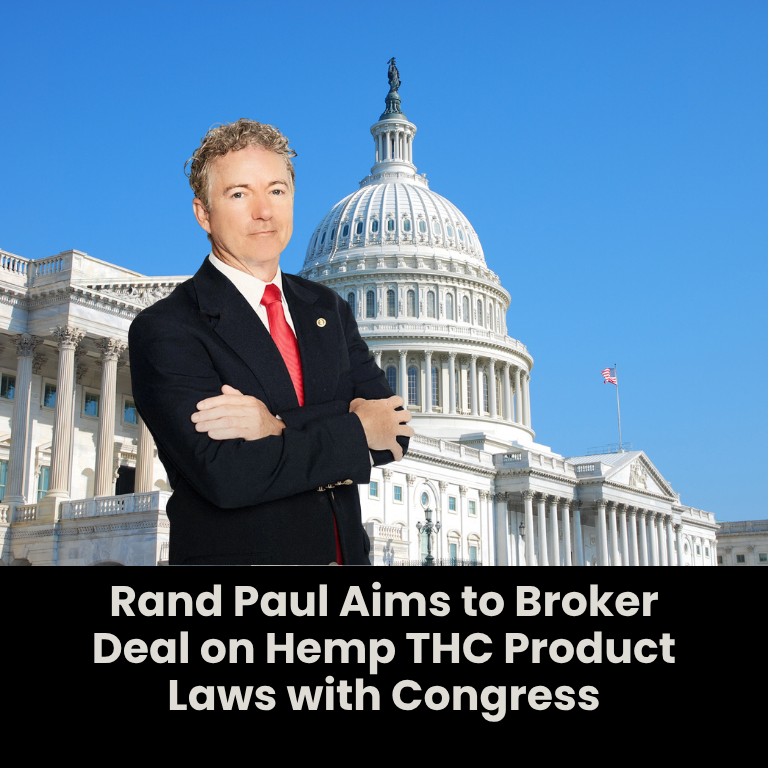
Kentucky Senator Rand Paul has announced plans to meet with House lawmakers in an effort to “reach a compromise” on regulating hemp, particularly opposing a congressional proposal to ban any hemp products containing a “quantifiable” amount of THC. This push comes as part of a broader discussion about vague regulatory language that could grant the U.S. Department of Health and Human Services (HHS), led by Secretary Robert F. Kennedy Jr., broad authority to define what constitutes a measurable amount of THC, potentially criminalizing a wide array of hemp-derived products.
Senator Paul’s Opposition to a Zero-Tolerance THC Limit Reflects Growing Industry and Public Safety Concerns
Recently, Paul successfully blocked the inclusion of this ban in a Senate agriculture spending bill. Writing in an op-ed, he emphasized ongoing talks with Senator Mitch McConnell, a key proponent of the legislation. The two Kentucky senators have found themselves at odds, with Paul championing regulations that preserve the thriving hemp industry established by the 2018 Farm Bill, a landmark reform that McConnell helped enact.
While McConnell has downplayed concerns that his proposed legislation would “completely destroy” the market, he ultimately agreed to withdraw the problematic language after Paul’s procedural objections, allowing the Senate to pass the bill.
Paul has voiced particular concern about the proposed ban setting the legal THC limit for hemp products at zero. He warns that such a restriction would be nearly impossible to comply with and could devastate the hemp sector, as consumers often purchase products for the health benefits attributed to trace THC levels. His opposition underscores the need for clear, science-based standards that protect consumers and farmers without unnecessarily stifling innovation.
Disputes Over THC Limits Highlight Challenges in Balancing Industry Growth and Consumer Safety
McConnell, meanwhile, has publicly challenged critics of the ban, implicitly targeting Paul. Despite the disagreement, Paul acknowledges issues within the intoxicating hemp market. Some distributors are allegedly exceeding legal THC limits by artificially enhancing cannabinoid concentrations, creating potentially unsafe products, some of which are accessible to underage users.
Acknowledging these problems, Paul supports reforms aimed at curbing synthetic cannabinoid additives and ensuring product safety. He points to the fact that at least 25 states have enacted age restrictions and THC limits on hemp products, a model he suggests could guide sensible federal reforms.
Nonetheless, Paul insists any federal limits on THC concentration must be realistically attainable and preserve the products’ intended effects, such as pain relief or anxiety management. Regulations that set THC thresholds too low risk destroying the industry’s viability and alienating consumers.
Focus Should Shift from Hemp Plant THC Limits to Finished Products and Industrial Uses
Paul’s proposal also includes a shift in regulatory focus from THC levels in hemp plants to those in finished, consumable products. He argues current rules, which require entire hemp fields to be destroyed if any plant exceeds a 0.3 percent delta-9 THC limit, unfairly punish farmers and waste resources.
He advocates exempting hemp grown for industrial purposes, like hemp wood, from stringent THC testing altogether. This approach, Paul asserts, would reduce unnecessary waste and support farmers while maintaining consumer safety.
A Call for Common Sense Regulation to Protect Kentucky’s Hemp Industry and Consumers
Senator Paul expressed optimism that bipartisan compromise is achievable. He said discussions with McConnell and other congressional members continue and that meetings with House lawmakers are imminent. These talks present an opportunity to inject “common sense” into hemp regulations, balancing industry growth with consumer protections.
Paul emphasized that reasonable and clear statutory guidelines are preferable to draconian laws that could “smash” a market upon which Kentucky’s farmers, business owners, and consumers depend. If stakeholders act in good faith, he believes a sustainable path forward can be found.
Legislative History and Industry Opposition to Proposed Hemp THC Bans
The hemp language Paul opposed in the Senate spending bill mirrored a nearly identical provision passed by the House Appropriations Committee, led by cannabis prohibitionist Representative Andy Harris (R-MD). Harris maintains confidence that the Senate will pass the ban despite opposition.
A June report from the Congressional Research Service stated the legislation would “effectively” prohibit hemp-derived cannabinoid products, initially including CBD, though the report was later revised to exclude CBD from the ban without explanation.
This legislative push aligns with prior attempts to restrict hemp products in appropriations and agriculture bills over recent years, all facing robust opposition from hemp stakeholders.
Industry and Advocacy Groups Push Back Against Broad Bans, Urging Differentiation Between Natural and Synthetic Cannabinoids
The Wine & Spirits Wholesalers of America (WSWA), a major alcohol industry group, criticized the House spending bill’s language, calling it tantamount to a ban. WSWA advocates preserving the legality of naturally derived cannabinoids while targeting synthetic substances.
Some GOP lawmakers have downplayed concerns about the bill’s impact on the hemp industry, even as stakeholders warn that the ban would threaten most consumable hemp products and jeopardize farmers and businesses nationwide.
Calls for Federal Regulatory Clarity Echo Amid Growing Cannabis Market and Industry Demand
The U.S. Hemp Roundtable’s general counsel recently told Congress that the hemp market urgently needs federal regulations. Kentucky Representative James Comer voiced frustration at the Food and Drug Administration’s slow pace in regulating cannabinoids like CBD, sarcastically questioning the agency’s resource commitment.
Meanwhile, reports indicate cannabis is increasingly seen as a competitor to the alcohol industry. Bloomberg Intelligence last year labeled cannabis a “significant threat” to alcohol, noting many consumers substitute cannabis for beer or wine.
In response, the alcohol industry has issued guiding principles warning of the “proliferation of largely unregulated intoxicating hemp and cannabis products,” citing potential risks to public health and safety.
The Path Forward for Hemp THC Regulation Lies in Bipartisan Compromise and Balanced Policies
The debate between Senator Rand Paul and Senator Mitch McConnell underscores the complexities of regulating hemp-derived THC products in a rapidly evolving market. While concerns about product safety and consumer protection are valid, overly restrictive regulations risk dismantling an important agricultural and economic sector.
Through ongoing bipartisan negotiations and input from industry, regulators, and consumer advocates, there is hope for crafting balanced federal policies. These would safeguard public health, protect farmers and businesses, and preserve consumer access to hemp products with naturally occurring THC.
As discussions continue, Kentucky’s hemp industry and potentially the broader U.S. market awaits clear, reasonable rules that foster growth while ensuring safety.
Topic(s):
OG source Download Article