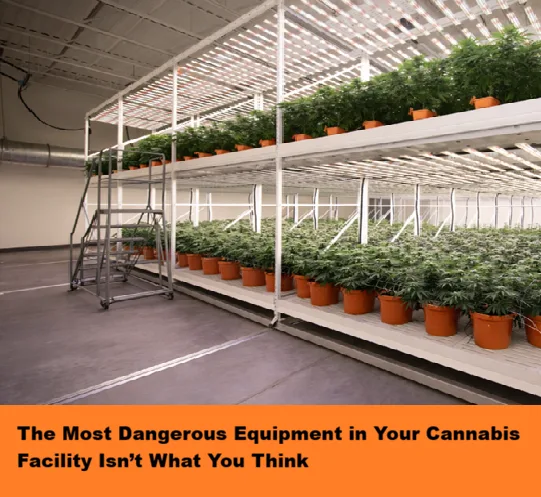
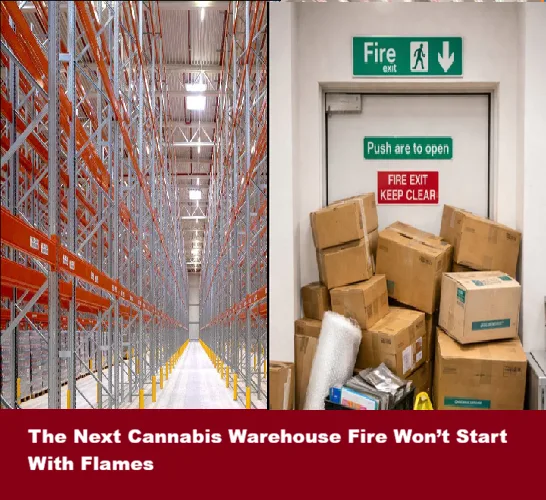
But one of the most common—and most underestimated—sources of serious injury in cannabis facilities is much simpler.
A ladder.
Not because it is inherently complex. But because it feels routine.
Why Ladder Risk Is Often Ignored
Ladders are everywhere in cannabis operations.
They are used for:
canopy maintenance
lighting adjustments
HVAC inspections
irrigation work
facility repairs
warehouse inventory access
Because they are part of daily operations, they rarely receive the same level of attention as more technical hazards.
That familiarity creates a false sense of control.
Yet across industries, ladder-related falls remain one of the leading causes of workplace injuries and fatalities.
In cannabis environments—where wet floors, tight grow spaces, and electrical infrastructure are common—the exposure becomes even more significant.
How Ladder Incidents Actually Happen
Ladder-related injuries in cannabis facilities are rarely dramatic.
They are usually small, routine moments:
a worker adjusting lights in a flowering room
a quick climb to check HVAC equipment
a slight shift in footing during canopy work
a reach that goes just a little too far
The fall may only be a few feet.
But the consequences can be serious.
Even short falls can lead to:
head injuries
spinal damage
lost-time incidents
workers’ compensation claims
regulatory attention
In a regulated industry like cannabis, a single incident can quickly extend beyond the injury itself.
It can affect compliance, insurance performance, and operational continuity.
The Real Problem: Operational Behavior, Not Equipment
Many operators treat ladder safety as a basic training requirement.
Train once. Check the box. Move on.
But ladder risk is not primarily an equipment issue.
It is a behavioral and operational discipline issue.
Across cannabis facilities, the same failure patterns appear repeatedly:
1. Incorrect Ladder Selection
Using the wrong type or size of ladder for the task.
2. Skipped Inspections
Damaged or unstable ladders used without proper checks.
3. Improper Setup
Poor angles, uneven surfaces, or unstable placement.
4. Overreaching During Work
Extending beyond safe limits instead of repositioning.
5. Carrying Tools While Climbing
Compromising balance and control during ascent.
None of these issues are complex.
But they are common—and consistently overlooked.
Why This Matters for Cannabis Operations
Cannabis facilities operate in environments where:
surfaces can be wet or uneven
space is often tight
work is fast-paced and repetitive
access tasks happen frequently
This combination increases the likelihood of small mistakes.
And with ladders, small mistakes can lead to disproportionate consequences.
More importantly, ladder incidents often occur during routine tasks.
That makes them harder to predict—and easier to ignore.
What Strong Operators Do Differently
Operators with better safety performance do not treat ladder use as informal.
They build structure around it.
This typically includes:
Clear Oversight of Ladder Use
Understanding where and how ladders are used across cultivation, maintenance, and warehousing.
Pre-Use Inspection Discipline
Ensuring ladders are checked before use—not after an issue occurs.
Proper Setup Standards
Reinforcing correct positioning, including safe angle and stable footing.
Controlled Climbing Practices
Requiring three-point contact and eliminating tool carrying during ascent.
Treating Ladders as Access Equipment
Not as convenience tools for quick, unplanned tasks.
These are simple controls.
But when applied consistently, they significantly reduce risk.
The Leadership Factor
Most ladder incidents do not happen because employees are unaware of the risks.
They happen because unsafe practices become normalized.
A worker climbs quickly because they have done it before. They reach too far because it “usually works.” They skip a step because nothing has gone wrong—yet.
This is where leadership matters.
In cannabis operations, safety culture is built on the small decisions made every day.
Supervisors and managers influence whether:
safe practices are reinforced
shortcuts are corrected
routine risks are taken seriously
When those standards are clear and consistent, outcomes improve.
When they are not, risk accumulates.
Final Takeaway
The most dangerous equipment in a cannabis facility is not always the most complex.
Sometimes, it is the most familiar.
Ladders are used every day, across cultivation, manufacturing, and warehousing.
That is exactly why they deserve more attention—not less.
Because in environments where small mistakes can lead to serious consequences, routine tasks are often where the greatest risks exist.