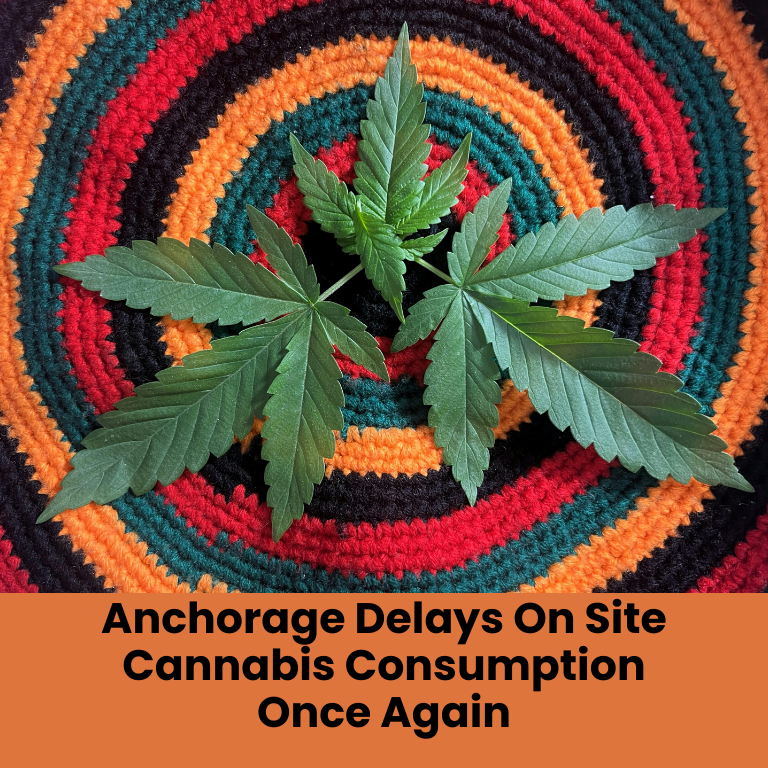
Residents of Anchorage, Alaska, will have to wait longer before they can legally smoke marijuana in retail cannabis shops. An ordinance that would have permitted on-site consumption in licensed establishments was tabled indefinitely by the Anchorage Assembly this week, leaving the city’s cannabis consumers and businesses in limbo.
The measure, introduced by East Anchorage Assembly member George Martinez, would have allowed retail licensees to apply for endorsements permitting cannabis use inside their establishments, consistent with state regulations. The Assembly voted 7-3 to table the proposal, effectively stalling progress on the long-debated issue of public cannabis consumption.
The Push for On-Site Consumption
Martinez, who has long advocated for expanding consumer access, urged his colleagues to continue the conversation. He pointed out that the state of Alaska already has detailed rules in place to govern on-site cannabis use.
“The state has developed strict rules for on-site consumption including, and all the way through, inhalation … with requirements for ventilation, employee protections and separate areas from retail,” Martinez said.
The proposed ordinance would not have created a free-for-all smoking environment. Instead, businesses would have been required to install costly air-filtration systems, maintain separate consumption spaces, and meet employee-safety standards. Advocates argue these safeguards make regulated cannabis lounges safer than informal, unregulated settings where marijuana is already consumed socially.
Historical Context: A Divided Anchorage
Anchorage voters previously rejected a ballot measure in 2020 that would have permitted cannabis consumption at retail shops. That decision reflected ongoing divisions in the community about how far legalization should extend beyond private residences.
Since Alaska legalized adult-use marijuana in 2014, the state has struggled with the question of public consumption. While buying and possessing cannabis is legal, smoking in public places remains prohibited, leaving tourists and renters without private residences few options for legal consumption.
Some municipalities, including Fairbanks and Juneau, have adopted limited on-site consumption rules. Advocates argue Anchorage—by far Alaska’s largest city—should follow suit to keep pace with the rest of the state and to support cannabis tourism.
Public Health Concerns Dominate Opposition
Despite these arguments, strong concerns about health risks continue to shape public opposition. During the Assembly meeting, multiple residents testified about the dangers of secondhand smoke, emphasizing that marijuana is no exception when it comes to carcinogens.
“It is clinically proven that cigarette and vaping smoke contain cancer-causing chemicals,” said Anchorage resident Don Enslow. “Secondhand marijuana smoke contains many of the same cancer-causing substances and toxic chemicals as secondhand tobacco smoke. Furthermore, ventilation systems cannot eliminate the health harms from secondhand smoke exposure.”
Opponents also voiced concerns for employees who would be required to work in these environments, potentially exposing them to harmful particulates even with protective systems in place.
The Business Community’s Frustration
Anchorage’s cannabis retailers, who have invested millions into the local economy since legalization, expressed frustration at the Assembly’s decision. For many business owners, the lack of on-site consumption options limits their ability to serve customers, particularly tourists who lack private spaces to consume legally purchased products.
Cannabis industry representatives argue that without designated, regulated spaces, visitors are more likely to consume in public parks, hotel rooms, or other areas where use is explicitly banned—ironically undermining the intent of legalization laws.
Retailers also highlight the competitive disadvantage Anchorage faces compared with other Alaskan cities that have already adopted on-site consumption ordinances. For businesses trying to attract customers in a maturing market, every additional service matters.
A Balancing Act Between Public Safety and Industry Growth
Anchorage’s struggle reflects a broader tension seen across the United States as more states and municipalities grapple with cannabis consumption laws. While legalization has expanded rapidly, social use spaces remain contentious. Health advocates emphasize the risks of secondhand smoke, while cannabis operators argue that regulated environments are safer than unregulated alternatives.
In states such as Nevada and Colorado, cannabis lounges are becoming a new frontier, offering tightly regulated spaces with advanced ventilation and strict operational standards. Anchorage’s ordinance attempted to follow a similar model, but public health concerns outweighed industry arguments for now.
What Comes Next for Anchorage?
The Assembly’s decision to table the ordinance indefinitely does not close the door on future action, but it significantly delays progress. Martinez and other advocates are expected to continue pushing the issue, pointing to state-level rules and the economic opportunities associated with cannabis tourism.
For now, consumers in Anchorage remain limited to private residences or outdoor spaces where smoking is permitted. With Alaska’s harsh winters and a growing tourist economy, industry leaders warn the lack of designated spaces is unsustainable.
Anchorage’s debate underscores the complexity of regulating cannabis in a way that balances consumer rights, public health, and business growth. Whether the city revisits the issue soon or leaves it to simmer for years may depend on shifting public opinion and the growing pressure from both the cannabis industry and Alaska’s tourism sector.
For now, the city’s cannabis lounges remain an idea waiting for their moment.
Topic(s):
OG source Download Article