Understanding Commercial Auto and Non-Owned Auto (NOA) Coverage for Employee Cannabis Deliveries: Protecting Your Business and Your Drivers
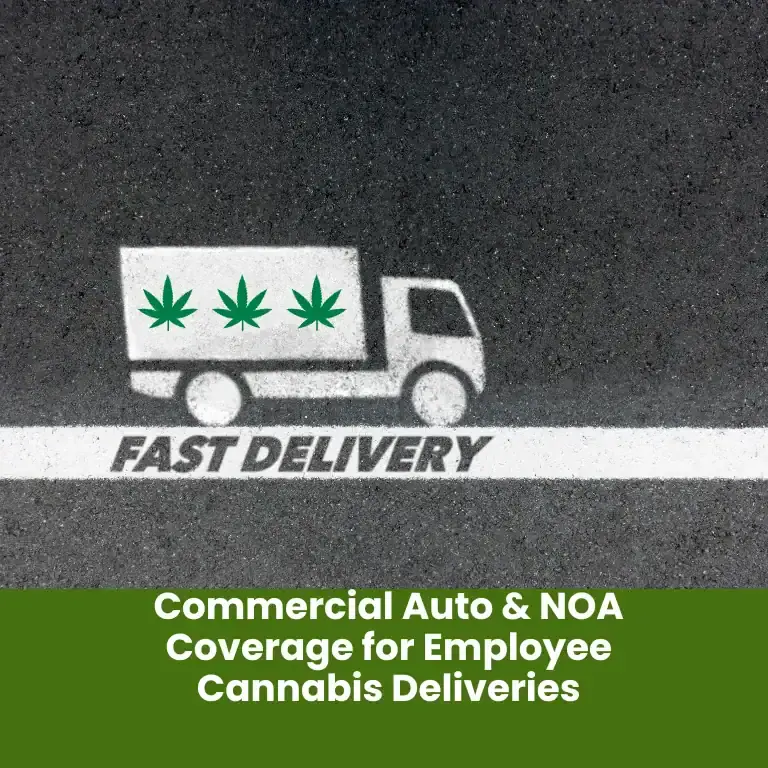
In the rapidly growing cannabis delivery industry, business owners must navigate not only regulatory compliance but also complex insurance requirements. One key component that many entrepreneurs overlook is commercial auto insurance, particularly Non-Owned Auto (NOA) coverage. This type of insurance becomes critical when employees use their personal vehicles to make deliveries on behalf of the business. Properly structuring NOA coverage can safeguard both the business and its employees in the event of an accident, physical damage, or liability claims.
Non-Owned Auto (NOA) coverage applies specifically when employees drive their own vehicles for business purposes. Unlike traditional commercial auto policies that cover vehicles owned by the company, NOA coverage extends liability protection to vehicles not owned by the business. This distinction is especially important in the cannabis delivery sector, where many startups operate with small fleets or rely entirely on employee-owned vehicles.
Why Employees Driving Their Own Vehicles Requires a Business-Use Endorsement
For employees to legally and safely make cannabis deliveries using their personal vehicles, they must add a business-use endorsement to their personal auto insurance policy. Personal auto insurance policies typically exclude coverage when the vehicle is used for business purposes, including deliveries or transporting products for a profit-generating activity. Without this endorsement, any accident that occurs while the employee is making deliveries may not be covered by their personal policy, leaving both the employee and the business exposed to potential financial liability.
The business-use endorsement essentially bridges this coverage gap. It allows the employee’s personal insurance to remain valid while the vehicle is used for business purposes, covering physical damage to the vehicle if the employee is at fault in an accident. While the endorsement protects the employee’s vehicle, it is not a substitute for commercial auto liability insurance. Business owners are still responsible for providing overarching liability coverage that sits above the employee’s personal coverage.
Combined Single Limit (CSL) Liability: Why $1 Million Coverage is Standard
Business owners in the cannabis delivery sector typically maintain a $1 million Combined Single Limit (CSL) liability policy to protect against damages or injuries resulting from delivery operations. CSL is an insurance term that refers to the maximum amount the insurance company will pay for both bodily injury and property damage resulting from a single accident.
For example, if an employee causes an accident while delivering cannabis, the first layer of coverage comes from the employee’s personal policy with the business-use endorsement. If damages exceed the employee’s coverage, the business owner’s $1 million CSL policy is triggered, providing a safety net for claims that could otherwise bankrupt a small business. This layered approach ensures that both employees and the business are financially protected, and it establishes a clear hierarchy of responsibility between the employee’s personal coverage and the business’s commercial liability coverage.
Employee Reimbursement for Mileage: Covering Costs of Wear and Tear
In addition to insurance requirements, businesses must reimburse employees for the use of their personal vehicles. Standard practice is to pay $0.58 per mile driven for work-related deliveries. This rate accounts for fuel, wear and tear, oil changes, tire replacement, and the increased cost of personal auto insurance due to business use.
This reimbursement structure mirrors policies used in other industries where employees use their personal vehicles for work, such as food delivery services like Uber Eats or DoorDash, as well as rideshare companies like Uber and Lyft. Providing fair compensation not only incentivizes employees to maintain their vehicles in good condition but also helps businesses avoid disputes related to vehicle expenses and liability coverage.
Risks of Operating Without Proper NOA and Commercial Auto Coverage
Failing to secure proper NOA and commercial auto coverage can leave cannabis delivery businesses extremely vulnerable. Without coverage, a single accident could result in lawsuits, medical expenses, and property damage claims that fall entirely on the business and the employee.
For instance, if an employee makes a delivery using their personal car without a business-use endorsement, their personal policy may deny claims for damages or liability incurred during the delivery. In such cases, the business owner may be held responsible, especially if state regulations require commercial liability coverage for cannabis deliveries.
Moreover, accidents involving cannabis deliveries can carry additional legal complexities. Even minor collisions could trigger investigations or compliance reviews from state regulators, particularly in states where cannabis distribution is tightly controlled. Proper insurance coverage ensures that the business can respond to such incidents without jeopardizing operations or financial stability.
How to Structure NOA Coverage for Maximum Protection
Structuring NOA coverage effectively requires careful planning and coordination between the business, its employees, and insurance providers. Key steps include:
Verify Employee Personal Policies: Ensure that each employee has an active personal auto policy and can obtain a business-use endorsement.
Layer Coverage: Maintain a $1 million CSL commercial auto policy to provide liability coverage above the employee’s personal coverage.
Document Mileage Reimbursement: Implement a clear mileage reimbursement policy to compensate employees for wear and tear and additional insurance costs.
Regular Training and Compliance: Educate employees on safe driving practices, legal requirements, and company procedures for reporting accidents.
Coordinate with Insurers: Work closely with insurance providers to confirm that coverage meets state cannabis regulations and adequately addresses potential risks.
By taking these steps, businesses can reduce the likelihood of coverage disputes, maintain compliance with state laws, and provide a safer working environment for employees.
Comparisons to Other Delivery Based Industries
The cannabis delivery sector shares insurance requirements with other gig-economy and delivery-based industries. For example, rideshare companies like Uber and Lyft require drivers to maintain personal auto insurance with a business-use endorsement, and the company provides a supplemental commercial liability policy. Similarly, food delivery services reimburse drivers for mileage and offer coverage that supplements the employee’s personal policy in case of accidents.
Cannabis delivery adds an extra layer of regulatory scrutiny due to the legal status of the product and state-specific compliance requirements. Many states mandate commercial insurance coverage, background checks, and strict handling procedures for products during transport. NOA coverage ensures that employees are not left financially vulnerable while performing deliveries, and that the business is protected from liability claims arising from accidents involving third parties.
Why Business Owners Must Prioritize Insurance Planning
Commercial auto and NOA coverage are not optional for cannabis delivery businesses, they are essential for legal compliance, risk management, and operational sustainability. Proper insurance planning benefits both the business and its employees by:
Protecting Employee Assets: Personal vehicles are covered in the event of an accident during a delivery.
Shielding the Business: Liability coverage prevents claims from exceeding the company’s financial capacity.
Ensuring Compliance: Meeting state and local insurance requirements avoids fines, suspensions, or loss of licenses.
Maintaining Reputation: Demonstrating a commitment to safety and compliance enhances credibility with customers, regulators, and investors.
Failing to prioritize insurance can have severe consequences. Even a single accident could trigger lawsuits, financial loss, regulatory action, and reputational damage that might take years to recover from.
Ensuring Safe, Compliant, and Sustainable Cannabis Delivery Operations
As the cannabis industry continues to expand, businesses must pay close attention to the insurance requirements for employees using their personal vehicles for deliveries. Non-Owned Auto (NOA) coverage, combined with a $1 million CSL liability policy and fair mileage reimbursement, provides a comprehensive framework to protect both employees and business owners.
Implementing these measures ensures that cannabis delivery operations are not only compliant with state law but also prepared for potential risks inherent in any delivery-based business. By proactively addressing insurance, liability, and reimbursement issues, companies can focus on growth, customer service, and safe delivery practices without exposing themselves or their employees to undue financial or legal risk.
With proper planning and coverage, cannabis delivery businesses can achieve the same professionalism and security seen in other delivery-based sectors, while meeting the unique regulatory demands of the cannabis market.