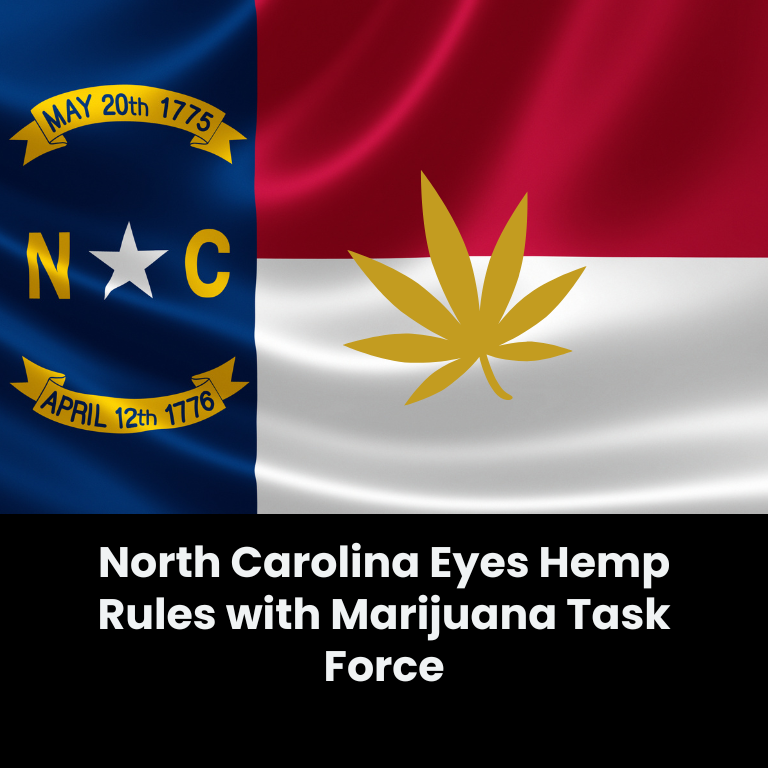
North Carolina Governor Signals Hemp Crackdown Amid Push for Legal Marijuana
RALEIGH, N.C. — North Carolina Gov. Josh Stein is walking a fine line between embracing adult-use marijuana legalization and calling for a crackdown on the largely unregulated market of hemp-derived THC products that has flourished across the state.
In a recent interview with WRAL, the newly elected Democratic governor voiced strong support for legal cannabis—but made clear that the current state of intoxicating hemp products is “the Wild West” and unacceptable without clear consumer protections.
Adult-Use Support With Guardrails
“I believe adults should be able to choose what they want to do, but they need to have information. They need to be protected,” Stein told the Raleigh-based TV station. The comments reaffirm Stein’s campaign platform, which included support for adult-use marijuana legalization and modernizing cannabis policy in the state.
However, Stein emphasized that his support for legalization does not extend to the unregulated sale of hemp-derived THC, which is widely available in North Carolina at gas stations, convenience stores, and even restaurants—often with no age restrictions or labeling requirements.
“The Wild West” of Hemp THC
Stein, who served previously as North Carolina’s attorney general, described the current situation as a chaotic legal loophole that puts public health at risk.
“It is the Wild West out there,” he said, pointing to the widespread availability of Delta-8, Delta-9, and other intoxicating hemp compounds derived from the 2018 federal Farm Bill. “The idea that we have a system where this product, which is a drug that can get you high, is for sale out there without any restrictions on how it’s sold, to me, is insane.”
State Cannabis Advisory Council Formed
To address the issue, Stein signed an executive order forming the North Carolina Advisory Council on Cannabis, a 24-member panel tasked with developing a comprehensive cannabis policy that covers both marijuana and hemp.
The council will include representatives from state agencies, law enforcement, state legislators, and the Eastern Band of Cherokee Indians (EBCI)—currently the only legal operator of a marijuana retail store in the state.
Under the order, the council must provide initial recommendations by March 15, 2026, and final policy proposals by December 31, 2026.
The inclusion of the EBCI is particularly notable, as the tribe opened a medical marijuana dispensary on its tribal land in September 2024. That dispensary remains the only legal access point for marijuana in the state.
North Carolina’s Regulatory Gaps
North Carolina has some of the most permissive rules around hemp-derived THC in the country. Products like Delta-8 gummies, hemp-derived Delta-9 edibles, and THC beverages are sold freely—often in non-traditional retail environments, such as pizzerias, as reported by Axios Raleigh.
Unlike most states, North Carolina has no state-level framework for testing, labeling, or restricting sales of these products. This has led to increasing concern from public officials, health experts, and some business owners who worry that the industry’s unchecked growth could lead to accidental ingestion or misuse, particularly among minors.
Federal and State Efforts Collide
Stein was one of 20 attorneys general who signed a letter in 2023 urging Congress to fix the regulatory ambiguity created by the 2018 Farm Bill, which legalized hemp but did not account for the intoxicating compounds that can be synthesized from hemp-derived CBD.
In response, federal lawmakers are beginning to take action. Last week, a House Appropriations subcommittee approved budget language authored by Rep. Andy Harris (R-MD) that would ban hemp-derived THC and THCA flower at the federal level, signaling bipartisan concern over the proliferation of these products.
Still, state-level efforts in North Carolina remain stalled. For the third year in a row, medical marijuana legislation has failed to advance in the North Carolina House of Representatives, despite moderate bipartisan support.
Missed Legislative Opportunities
Earlier this year, lawmakers introduced a bill that would have regulated intoxicating hemp sales, including age restrictions and testing requirements, while allowing the products to remain legal. However, the proposal failed to gain momentum and died in the state Legislature.
North Carolina remains a top hemp-producing state, but the lack of regulation around derived THC products has left the industry in a legal gray zone, confusing consumers and frustrating policymakers.
With the formation of the Advisory Council on Cannabis, Stein is taking the first formal steps toward overhauling cannabis policy in North Carolina. The council’s broad mandate suggests a willingness to explore both medical and recreational marijuana legalization, as well as a tighter regulatory grip on hemp-derived products.
But the timeline is long: Final recommendations won’t be delivered until the end of 2026, leaving nearly two more years of continued uncertainty for the state’s booming hemp market.
For now, consumers and businesses alike are navigating an industry with no consistent rules, while the state government begins the slow process of bringing order to what the governor bluntly calls a lawless market.
Topic(s):
OG source Download Article