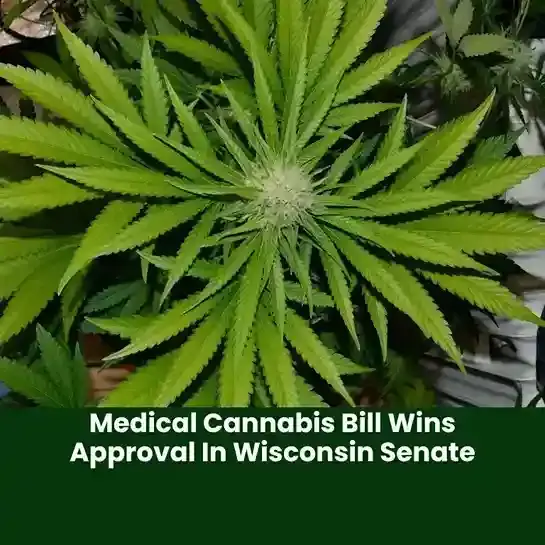
Wisconsin Senators Advance GOP-Led Medical Cannabis Bill As Debate Over Full Cannabis Legalization Intensifies Across The State
Wisconsin senators have taken a significant step toward medical cannabis reform, approving legislation that would legalize medical marijuana even as other lawmakers continue pushing for broader adult-use legalization.
The Senate Health Committee on Thursday advanced the proposal from Senate President Mary Felzkowski (R) and Sen. Patrick Testin (R) in a 4–1 vote. The action follows an initial hearing held months earlier on the GOP-led measure, which was first introduced last October.
Assembly Leadership Signals Support For Medical Access But Warns Current Proposal Faces Steep Odds In The House
Despite the committee’s approval, the path forward remains uncertain. Wisconsin Assembly Speaker Robin Vos (R) previously expressed hope that lawmakers could “find a consensus” on medical marijuana legislation. However, he cautioned that the Senate version is “way too broad and way too wide-ranging” to pass the Assembly in its current form.
Vos has also weighed in on federal cannabis policy, saying President Donald Trump made the “wrong” decision in ordering marijuana rescheduling, which he described as involving a “dangerous drug.” Still, he acknowledged that easing research barriers could help demonstrate limited medical benefits as an alternative to certain prescription medications.
Even so, Vos said the legislature is “not there” yet in terms of votes needed to pass a medical cannabis bill, despite his long-stated support for patient access.
Key Provisions Outline Strictly Regulated Medical Cannabis Program With Limited Product Forms And No Home Cultivation
The Senate proposal lays out a tightly controlled medical marijuana framework. Qualifying conditions would include cancer, HIV/AIDS, PTSD, epilepsy, glaucoma, chronic pain, severe nausea, Alzheimer’s disease, Parkinson’s disease, multiple sclerosis and terminal illnesses, among others.
Permitted product forms would include oils, tinctures, edibles, pills, topicals, vapors, patches and liquids. Smokable cannabis would be prohibited, and home cultivation would not be allowed.
Patients could designate up to three caregivers authorized to purchase and possess cannabis on their behalf. Registrations would last two years with a $20 annual fee, and could be revoked for certain felony convictions or drug law violations.
Dispensaries would be required to employ pharmacists to consult with patients and recommend dosages. Initial purchases would be capped at a 30-day supply, expanding to 90 days for subsequent visits.
Regulatory Structure Would Create New State Oversight Office And Track Patient Use Through Monitoring System
Patient use would be logged in the state’s Prescription Drug Monitoring Program. The legislation would also establish an Office of Medical Cannabis Regulation under the Department of Health Services to oversee registries and dispensaries.
Meanwhile, the Department of Agriculture, Trade and Consumer Protection would regulate cultivation, processing and testing.
The bill includes parental rights and housing protections for patients and caregivers but allows employers to discipline or refuse to hire workers based on medical marijuana use. Cannabis products would be exempt from sales tax.
Local governments would be barred from banning or zoning out medical cannabis businesses.
Democrats Renew Push For Adult-Use Legalization As Public Support Continues To Climb Statewide
While Republicans advance a limited medical program, Democratic lawmakers are again pressing for full legalization.
“Legalization of cannabis is not radical,” Rep. Darrin Madison (D) said at a recent press conference. “What’s radical is continuing a system that destroys lives, drains resources and ignores the will of the people.”
With a gubernatorial election approaching, several candidates from both parties have voiced openness to legalization, in part to fund public programs such as broadband expansion.
Polling suggests strong voter backing. A Marquette Law School survey released last June found that 67 percent of Wisconsin voters support legalization up 17 percentage points since 2013.
Budget Battles, Regional Competition And Political Control Continue To Shape Wisconsin’s Cannabis Debate
Republican lawmakers have repeatedly stripped marijuana provisions from state budget proposals and rejected legalization amendments, underscoring the importance of party control in the legislature.
Gov. Tony Evers (D), who supports legalization and is not seeking re-election, has consistently included cannabis reform in budget requests. He has argued legalization would prevent residents from spending money in neighboring Illinois, where adult-use sales are legal.
State revenue analyses reinforce that point: Wisconsin residents were estimated to have spent more than $121 million on cannabis in Illinois in 2022 alone.
Future Of Cannabis Reform In Wisconsin Hinges On Legislative Negotiations And Upcoming Elections
Despite ongoing resistance, Republican leaders have acknowledged that the medical marijuana debate “is not going to go away.” Some GOP candidates for governor have also said they are open to considering medical or adult-use legalization.
For now, the Senate committee vote marks progress for medical cannabis advocates but significant legislative hurdles remain as Wisconsin lawmakers continue negotiating the future of marijuana policy in the state.
Topic(s):
OG source Download Article