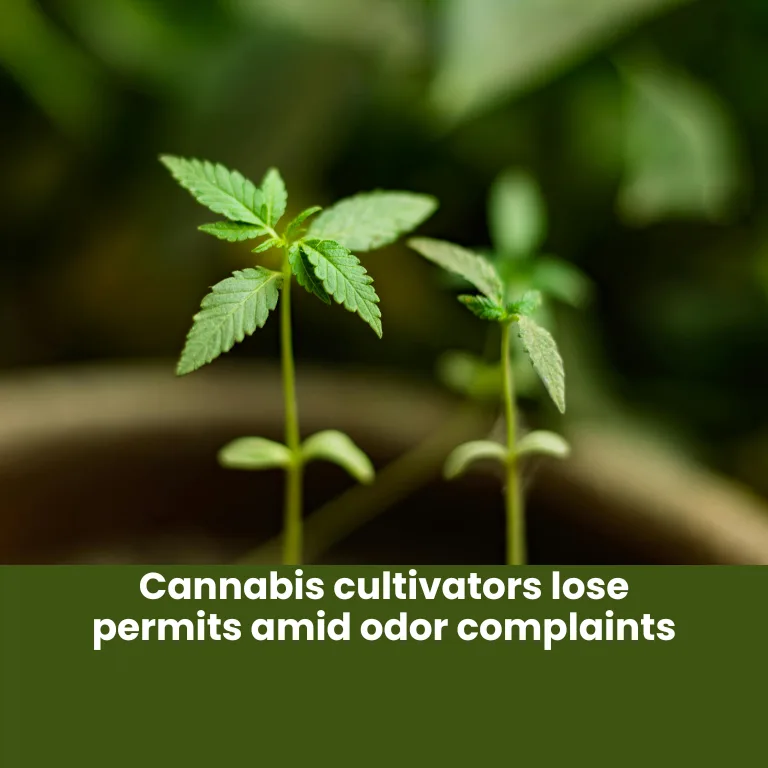
Santa Barbara County Moves to Revoke Cannabis Cultivation Permits as Odor Complaints Trigger Enforcement Action
At least nine cannabis cultivation companies in California’s Santa Barbara County—including affiliates tied to Glass House Brands—are at risk of losing their licenses after failing to comply with strict odor-control regulations, according to local officials.
The enforcement action follows a county law passed last year requiring growers to install odor-mitigation systems by the end of March or face permit revocation. On April 3, nine companies that did not meet the deadline were issued revocation letters, signaling a significant escalation in the county’s efforts to address long-standing community complaints.
Those companies include Blue Whale Agriculture Inc., Bosim 1628 Management Co., Bronco Management, CKC Farms Inc., G&K Produce, K&G Flowers, Life Remedy Farms Inc., New Generation Farms Inc. and Pacific Grown Organics.
State business records indicate that G&K Produce and K&G Flowers are linked to senior executives at Glass House, further raising the stakes for one of the nation’s largest cannabis cultivators.
Appeals Process Offers Temporary Lifeline as Companies Continue Operations Amid Uncertainty
Despite receiving revocation notices, all nine companies remain operational for now.
Affected operators have until April 20 to file an appeal, initiating a review process that could extend up to 60 days, according to county officials. During that time, cultivators may continue business as usual, though the threat of losing permits looms large.
The situation leaves both regulators and growers in a holding pattern, as the outcome of the appeals process will determine whether enforcement actions are upheld or modified.
Years of Resident Complaints Over Cannabis Odor Drive Strict New Regulations in California’s Largest Cultivation Hub
Located near Santa Barbara and within reach of major retail markets such as Los Angeles, Santa Barbara County became a focal point for cannabis cultivation after California legalized adult-use marijuana in 2016.
Favorable growing conditions and abundant agricultural land attracted large-scale operations, but the rapid expansion also brought backlash. Thousands of residents have filed complaints in recent years, citing strong and persistent cannabis odors from outdoor and greenhouse farms.
In response, county officials enacted one of the state’s most stringent odor-control policies, requiring cultivators to install carbon filtration systems designed to significantly reduce emissions.
However, compliance has proven costly. Carbon scrubbers can run about $22,000 per unit, with recommendations of up to 10 machines per acre of canopy—placing a heavy financial burden on operators.
As of last month, fewer than half of the county’s indoor and greenhouse cultivators had installed the required systems, while extension requests from others were denied.
Glass House Brands Faces Mounting Challenges as Odor Enforcement Adds to Financial and Operational Pressures
The potential permit losses mark another challenge for Glass House Brands, a vertically integrated operator with cultivation and retail operations across California.
The company recently reported a net loss of $29 million, reflecting a downturn in wholesale production during the latter half of 2025. That decline followed high-profile federal immigration enforcement actions at its facilities in Camarillo and Carpinteria, where authorities arrested more than 360 alleged undocumented workers. No cannabis was seized, and no charges were filed.
Even as it navigates these setbacks, Glass House has signaled ambitions for growth. The company is positioning itself for potential federal cannabis policy changes and has set a target of producing 1 million pounds of cannabis in 2026.
Balancing Industry Growth and Community Concerns Remains a Persistent Challenge for Local Regulators
Santa Barbara County’s crackdown underscores the ongoing tension between expanding cannabis production and maintaining quality of life for local residents.
While the region remains a cornerstone of California’s cannabis supply chain, regulators are increasingly under pressure to enforce environmental and public nuisance standards.
The outcome of the current enforcement actions and whether companies can successfully appeal will likely shape how aggressively odor regulations are implemented going forward, not just in Santa Barbara County but in other major cultivation regions facing similar concerns.
OG source Download Article