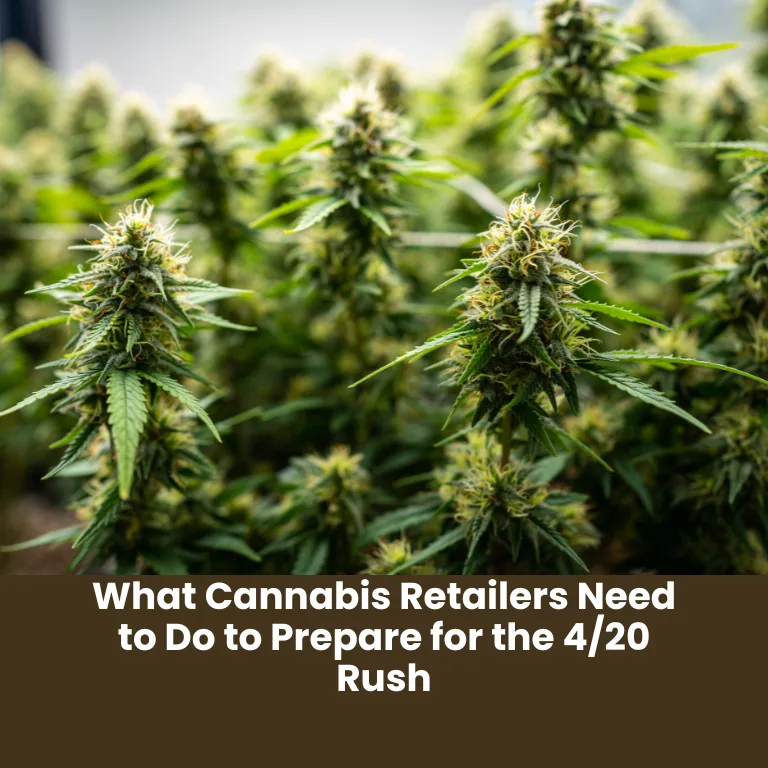
As 4/20 Approaches, Cannabis Retailers Face Their Biggest Day of the Year And Success Hinges Less on Discounts Than on Operational Readiness and Customer Experience
By midmorning on April 20 widely known as 420 cannabis holiday cannabis retailers are already under pressure. Lines stretch out the door, staff scramble to manage inventory and customer questions, and online pickup and delivery orders pile up.
For many stores, the rush exposes weak points. Customers drawn in by promotions sometimes leave empty-handed when popular products sell out. Others abandon long lines altogether taking potential revenue with them.
Industry observers say this is what makes 4/20 more than just a sales event. It’s a full-scale operational test.
Steph Vrona, founder of High Def Studio, described it as “an operational stress test,” where the retailers that succeed are not necessarily those offering the deepest discounts—but those best prepared to handle demand efficiently.
Industry Experts Say Winning on 4/20 Requires Strategic Planning, Seamless Systems and a Focus on Throughput Over Promotions
According to Chase Jepson, a product manager at Treez, the most successful retailers approach 4/20 with a clear operational strategy.
“The stores that do best on 4/20 aren’t usually the ones with the steepest markdowns,” he said. “They’re the ones with a thoughtful plan for what to promote, how to promote it and how to move people through the store efficiently.”
Data backs up the stakes: demand during the 4/20 weekend can exceed a typical weekend by nearly 50 percent, making preparation critical.
Experts stress that retailers should treat the day not as a simple promotion—but as a systems-driven event where technology, staffing and logistics must all perform under pressure.
From POS Systems to Inventory Management, Retailers Must Ensure Every Operational Link Is Tested Before the Surge Begins
One of the most common failure points starts at the door, where customer identification and check-in processes can create immediate bottlenecks.
Inside, high transaction volumes can overwhelm point-of-sale systems, payment terminals and inventory platforms. If any one piece fails, operations can quickly grind to a halt.
Jepson warned that retailers cannot rely on last-minute fixes during the rush. Instead, they should verify that all systems—from e-commerce platforms to in-store kiosks—are fully functional well before the weekend begins, and ensure staff are trained to use them confidently.
Stocking Strategy Can Make or Break the Day, With Experts Urging Backup Plans and Clear Messaging to Avoid Customer Frustration
Running out of a promoted product mid-rush is one of the most damaging mistakes a retailer can make on 4/20, according to industry consultants.
Sandra Bergman, founder of ESBE LLC, recommends two simple safeguards: always have comparable backup products ready and clearly communicate availability using “while supplies last” messaging.
These steps help manage expectations while allowing retailers to pivot quickly if demand exceeds forecasts.
Long Lines Are Inevitable on 4/20, but Retailers That Manage the Experience Can Turn Wait Times Into Brand-Building Opportunities
Heavy foot traffic is unavoidable, but how retailers handle it can define customer perception.
Vrona suggests implementing check-in systems that allow customers to browse or participate in in-store activities before being called to purchase, reducing the frustration of standing in a static line.
Some retailers also deploy “line busters” staff or brand ambassadors who engage customers in line with giveaways, promotions or entertainment to maintain energy and goodwill.
“The experience is what customers remember,” Vrona noted. “If the experience is bad, your deal becomes a footnote to a negative review.”
Inside the Store, Smart Layouts, Online Ordering and Express Pickup Lanes Help Keep Customers Moving and Increase Sales
Managing the crowd doesn’t end at the door. Once inside, efficiency at the sales floor and checkout is critical.
Experts recommend promoting online ordering ahead of 4/20 to spread demand and secure early revenue. However, this strategy only works if retailers provide dedicated express pickup lanes.
“If a preorder customer has to wait in the same line as everyone else, you’ve eliminated the incentive,” Jepson said.
Retailers are also encouraged to offer pre-built product bundles to reduce decision time, particularly for first-time customers who may feel overwhelmed by choices.
Capturing Customer Data and Building Loyalty Programs Turns a One Day Surge Into Long-Term Revenue Growth
While the sales spike is significant, experts say the real opportunity lies in what happens after 4/20.
Every new customer who leaves without joining a loyalty or communications program represents lost future revenue. Bergman advises retailers to use check-in points as enrollment opportunities and to have automated email or text campaigns ready in advance.
Vrona recommends offering time-sensitive rewards, such as bonus loyalty points that expire quickly, to encourage repeat visits during the post-holiday slowdown.
First-time customers can also be incentivized to return through deferred rewards, ensuring they feel they’ve gained value beyond the initial visit.
Ultimately, Retailers That Treat 4/20 as a Long-Term Growth Opportunity Not Just a Sales Event Are Best Positioned to Succeed
Discounts will always play a role in 4/20 promotions. But industry experts agree that execution not price cutting is what separates a successful event from a missed opportunity.
Retailers that prepare their systems, train their staff and build strategies to retain customers beyond the holiday are more likely to turn the annual surge into sustained growth.
As the cannabis industry continues to mature, 4/20 remains both its biggest celebration and its toughest test.
OG source Download Article