Massachusetts Lawmakers Debate Cannabis Advertising as Industry Pushes for Reform and Public Health Advocates Push Back
Cannabis Advertising Restrictions Come Under Review as Lawmakers Hear From Both Sides
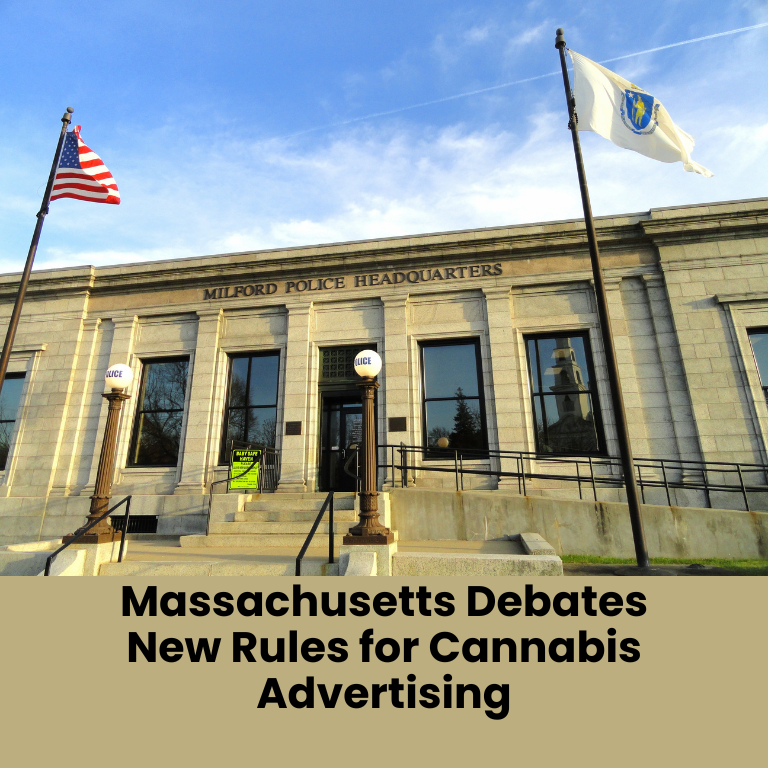
The Massachusetts Joint Committee on Cannabis Policy held a pivotal hearing this week, drawing testimony from cannabis entrepreneurs, public health advocates, researchers, and citizens across the state. At the center of the debate was a critical industry question: Should cannabis companies be allowed to advertise their products, offer sales, or launch loyalty programs like most other retail businesses?
Since the legalization of adult-use cannabis in Massachusetts in 2016, the state has imposed some of the most restrictive cannabis advertising rules in the country. As it stands, cannabis companies are banned from advertising in places where more than 15% of the audience is expected to be under 21, and from offering any form of promotional marketing—such as discounts, giveaways, or customer rewards programs. These limitations, critics argue, put local cannabis businesses at a major disadvantage in an already saturated and competitive market.
Senate and House Bills Present Conflicting Visions for Cannabis Advertising Regulations
While the Massachusetts House passed a broad cannabis reform package earlier this summer, it did not include any changes to the advertising rules. However, lawmakers have filed several stand-alone bills on the matter, reflecting widely divergent viewpoints.
Some bills, filed mostly by House lawmakers, propose tightening advertising rules—such as banning cannabis billboards or implementing harsher penalties for violations. These bills are largely driven by public health concerns about youth exposure to cannabis advertising.
In contrast, a bill introduced by Sen. Dylan Fernandes (D–Falmouth) has strong backing from cannabis business owners and aims to loosen marketing restrictions. His proposal would allow dispensaries to run sales, offer discounts, and implement loyalty programs—practices currently permitted in the alcohol industry but banned for cannabis retailers.
Small Cannabis Businesses Say Current Restrictions Undermine Equity and Fair Competition
The hearing featured powerful testimony from social equity business owners who said the current restrictions make it nearly impossible to compete with large multi-state operators (MSOs) and the booming hemp-derived THC market.
Nike John, owner of The Heritage Club in Boston and a graduate of the state’s social equity program, told lawmakers that advertising is fundamental to running any business—cannabis should be no exception. “Marketing is a function of all businesses,” she said, urging the state to stop treating cannabis as a public health threat rather than a legitimate economic engine.
Phil Smith, co-founder of Freshly Baked in Taunton, echoed the sentiment. “We are being asked to compete with one hand tied behind our back,” he said. “Everyone else can offer sales, loyalty points, and coupons. But cannabis businesses can’t—even though we are heavily taxed and tightly regulated.”
Smith emphasized that loosening these restrictions would level the playing field—not only against alcohol retailers and MSOs, but also against hemp-derived THC businesses, which are not held to the same standards and are increasingly capturing market share with cheaper, less regulated products.
Opponents Cite Youth Safety, Health Risks, and the Need to Curb Public Exposure to THC Marketing
On the other side of the issue, public health experts and youth advocates urged lawmakers not to weaken current restrictions. They argued that aggressive marketing of high-potency cannabis poses serious risks to minors and could fuel a surge in youth cannabis use disorder.
Amy Turncliff, a neuroscientist and therapeutic consultant for addiction disorders, spoke in favor of stricter advertising bans, saying Massachusetts has failed to adequately protect public health since legalizing recreational cannabis nearly a decade ago. She advocated for removing cannabis billboards from public spaces entirely.
David Jernigan, a professor at Boston University’s School of Public Health and an expert on cannabis marketing, also supported a billboard ban. He cited research showing that teens exposed even occasionally to cannabis billboards were significantly more likely to develop problematic cannabis use. “You can’t change the channel on a billboard,” Jernigan warned. “If you’re young and it’s there, you’re going to see it.”
Cannabis Advertising Rules Compared to Alcohol Show Disparities in Regulatory Treatment
The cannabis industry has long pointed out that alcohol—a substance with its own set of public health risks is allowed to be promoted far more freely than marijuana. Liquor stores and breweries in Massachusetts can advertise discounts, host happy hours, and offer branded merchandise.
Industry advocates argue that cannabis is being unfairly stigmatized by advertising rules that are far more restrictive, despite being regulated as a legal product in the state. Fernandes’ bill would bring cannabis advertising in line with alcohol, allowing retailers to engage in normal marketing activities so long as they follow age-gating requirements and responsible messaging guidelines.
State Cannabis Commission Reported Widespread Non-Compliance Among Businesses
Adding complexity to the debate is the reality that some cannabis companies are already bending or ignoring advertising rules. The Cannabis Control Commission (CCC) released an advisory in May 2024 stating that a growing number of licensed businesses are violating the state’s strict rules—some openly, others more subtly. The agency expressed concern that enforcement alone may not be enough and that a clearer regulatory framework is needed.
Critics of the current rules say the CCC’s findings underscore a broader point: that over-regulation often leads to uneven compliance and a lack of accountability. Businesses with more financial resources can absorb fines as a cost of doing business, while smaller operators must forgo marketing altogether to avoid penalties.
Hemp Loophole and Interstate Competition Add to Pressure for Reform
Another factor fueling industry calls for reform is the unregulated proliferation of hemp-derived THC products, such as delta-8 and THCA flower, which can be sold in gas stations and smoke shops without the same restrictions as cannabis. These products, chemically similar to marijuana but derived from federally legal hemp, exist in a gray area that allows them to be heavily marketed with little oversight.
This loophole has created a competitive disadvantage for cannabis dispensaries, which must pay state taxes, follow strict lab testing requirements, and limit their advertising.
Lawmakers Face a Divided Landscape as Senate Considers Whether to Act on Cannabis
Whether the Massachusetts Senate will act on cannabis advertising—or cannabis reform at all—this session remains uncertain. So far, Senate leadership has not signaled plans to bring a bill to the floor. However, several senators, including co-chair Sen. Adam Gomez, acknowledged that the state’s cannabis laws are still evolving and in need of thoughtful, balanced updates.
Massachusetts at a Crossroads in Balancing Public Health and Cannabis Equity
The debate over cannabis advertising in Massachusetts highlights a deeper conflict between public health priorities and economic justice. Advocates on both sides are urging lawmakers to take decisive action, whether by tightening restrictions or allowing struggling businesses to compete fairly.
As pressure mounts from cannabis operators, health experts, and community leaders alike, the state must now decide: Will it continue to treat cannabis as an exception to the norms of commerce or begin to normalize its presence in the regulated marketplace like alcohol?
The answer may shape the next phase of Massachusetts’ cannabis industry for years to come.
Topic(s):
OG source Download Article